PROTOCOL: 1M-s3
A First-person puzzle boss Encounter
Level & Technical Design
Summary
A fast-paced first-person shooter for 1–3 players, focused on a raid-style boss encounter, fluid level design, and integrated puzzle-solving. Inspired by the endgame experiences of Destiny and Marathon.
Goals
Variation in Gameplay
Intuitive, logical but not trivial puzzle mechanics
Raid-styled boss encounter
Level design that support fast-paced combat
Project Breakdown
Solo 4 Weeks halftime (4hours/day)
Created using Unreal Engine 5.7 and Blender
Scripts created by me
Marketplace assets/plugins used:
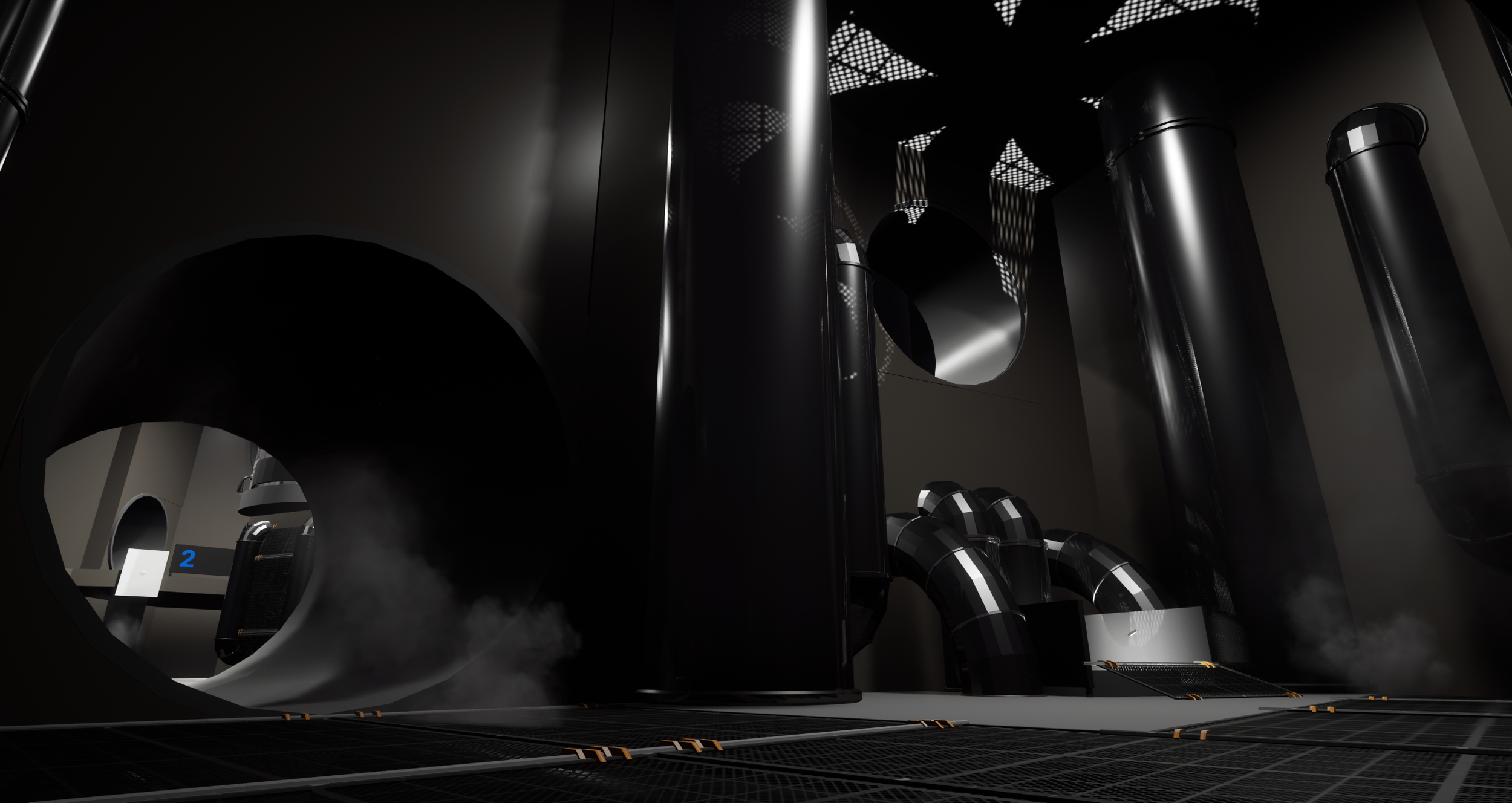
Trailer
Go To Section
Level Design
PROTOCOL: 1M-S3
Topdowns
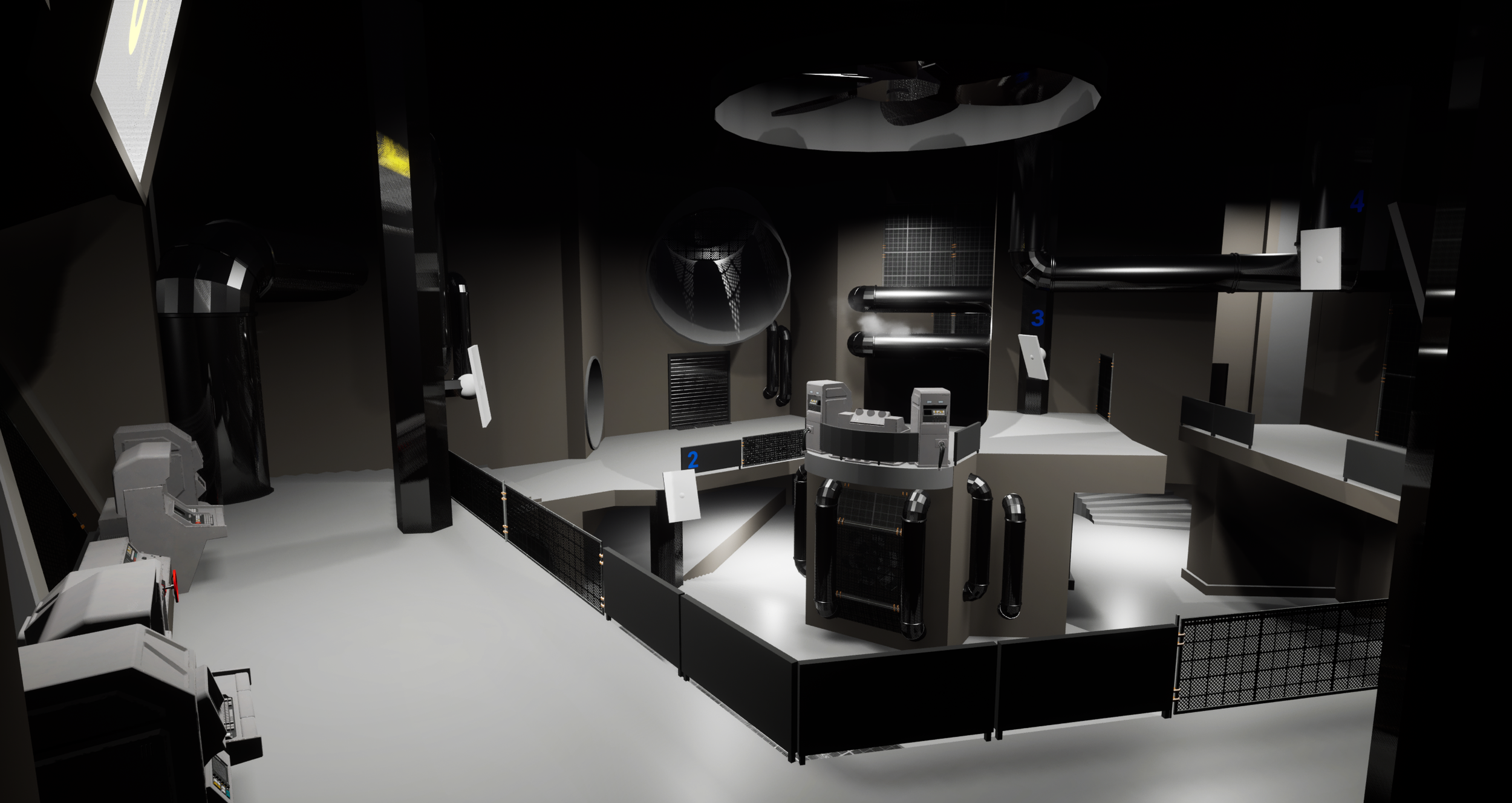
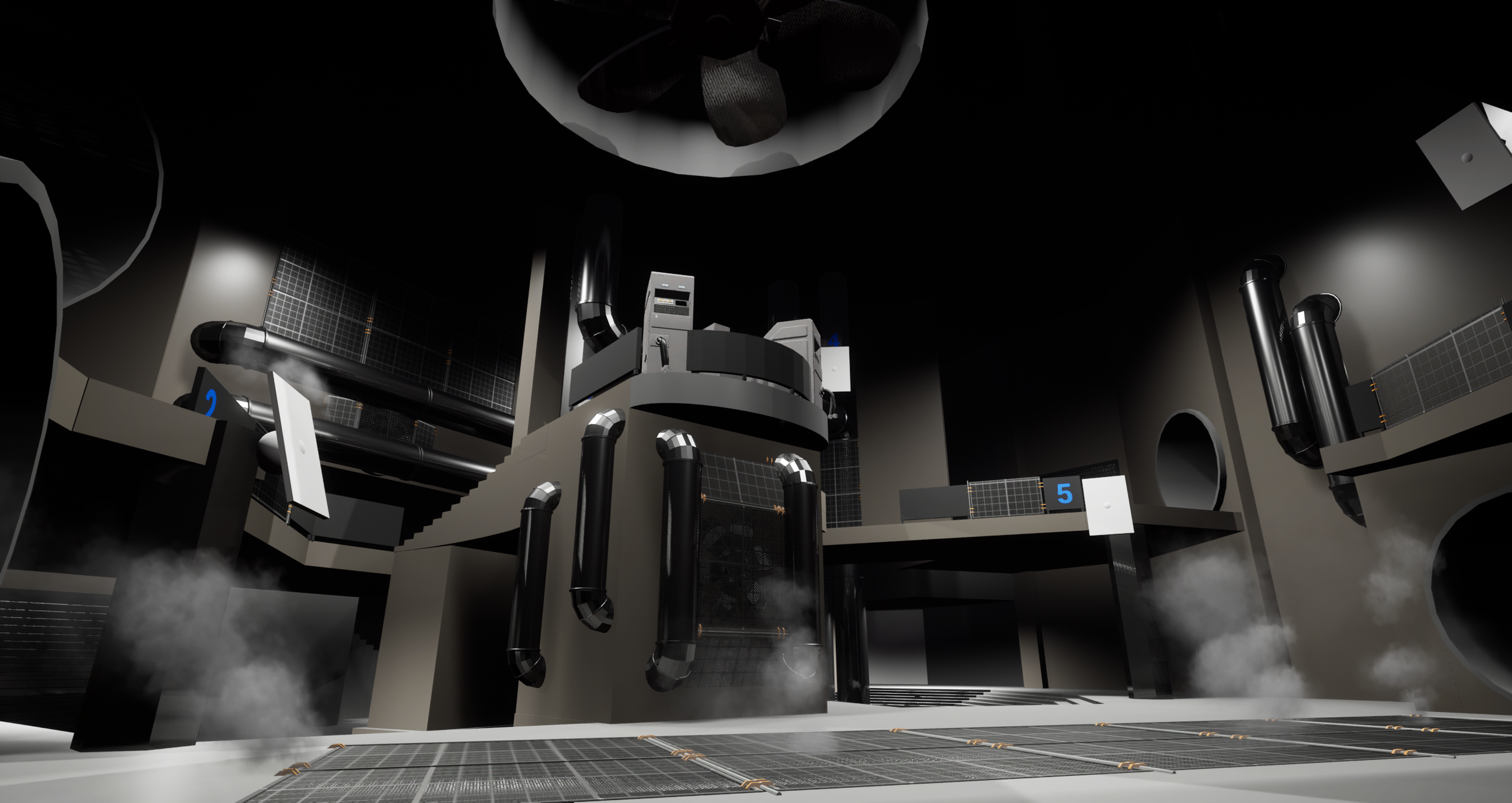
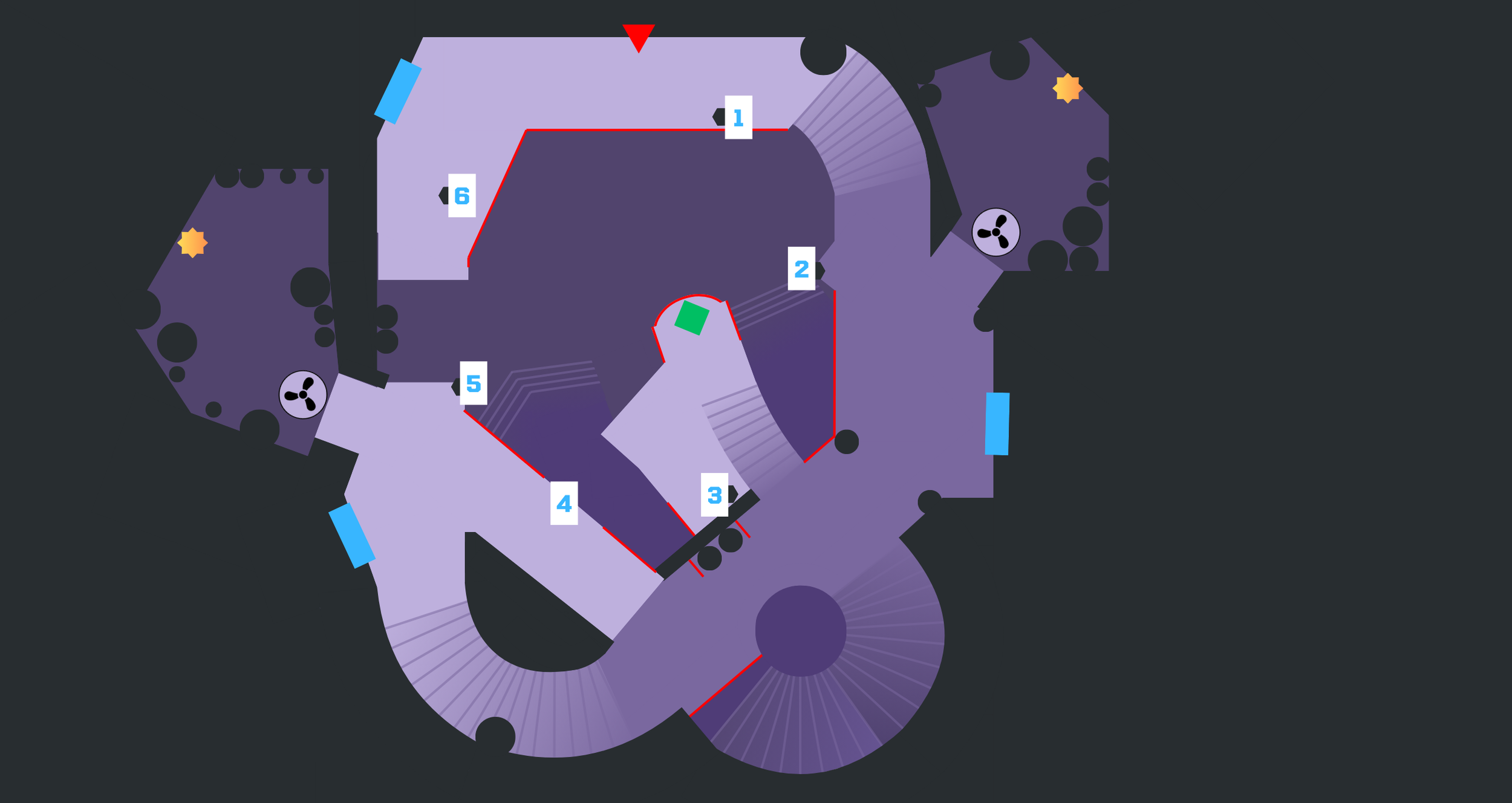
Control Room 1st floor
Control Room 2nd floor
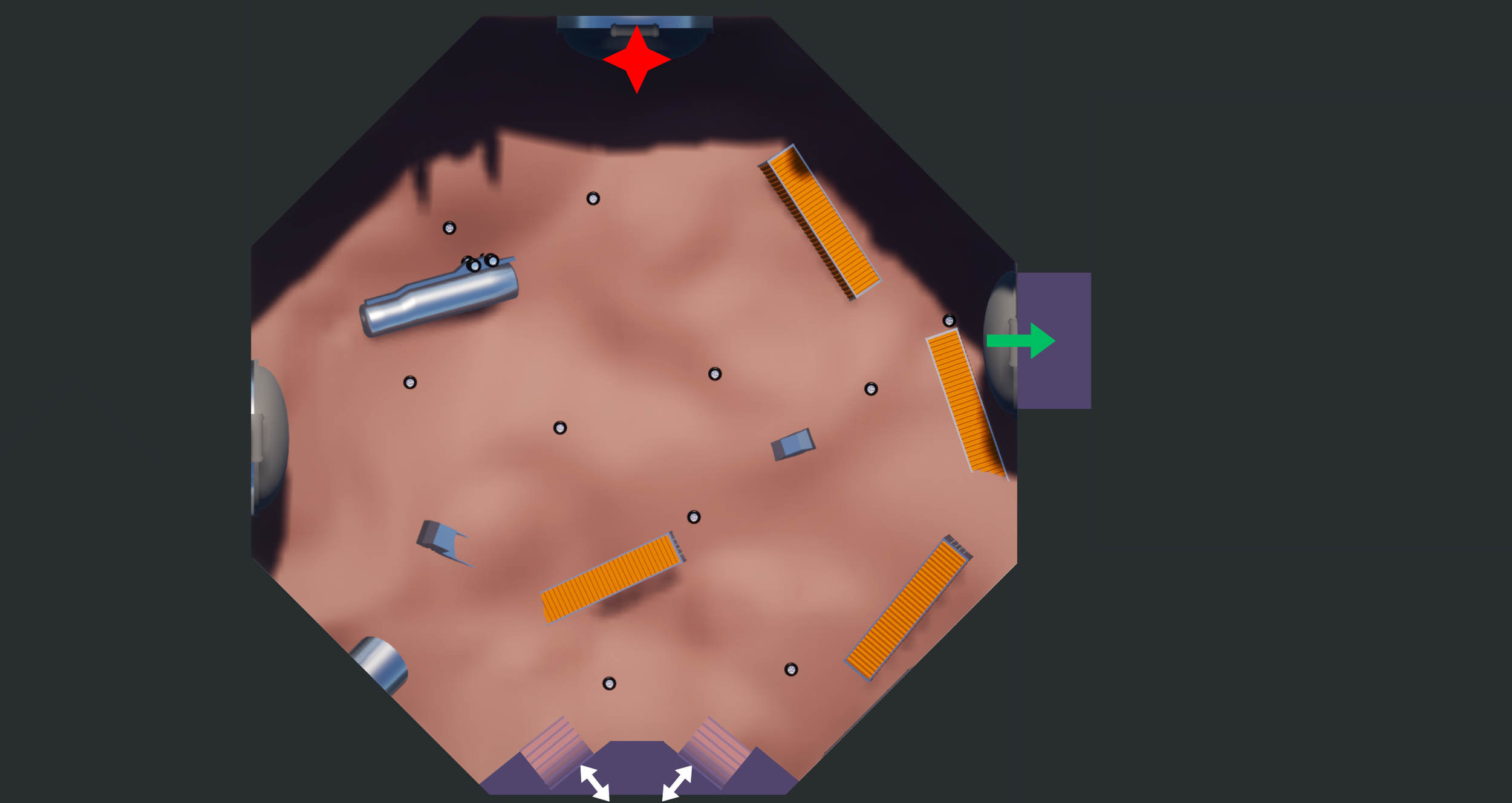
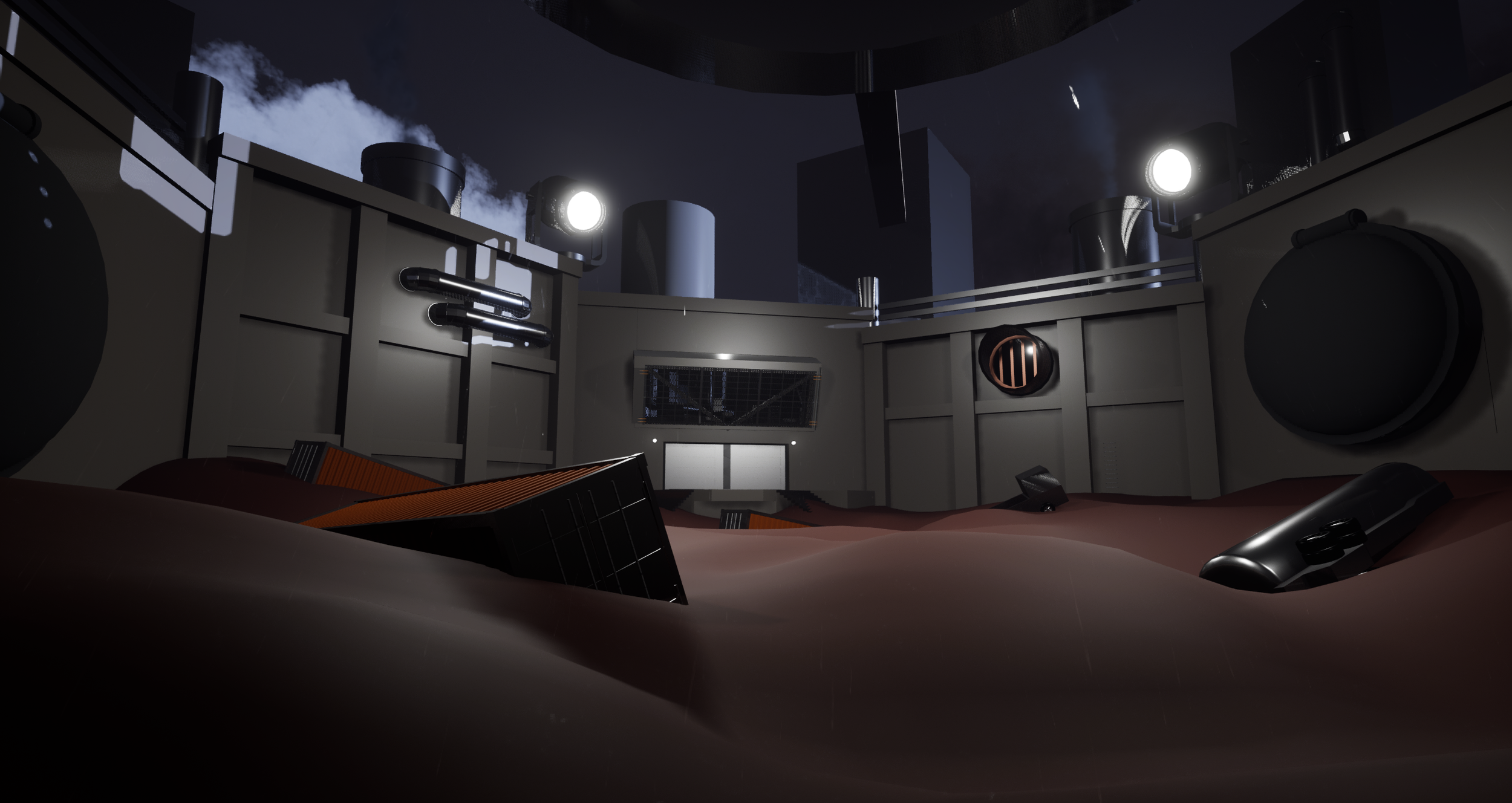
Scrapyard Arena

Encounter Flowchart
1. Initiate Encounter
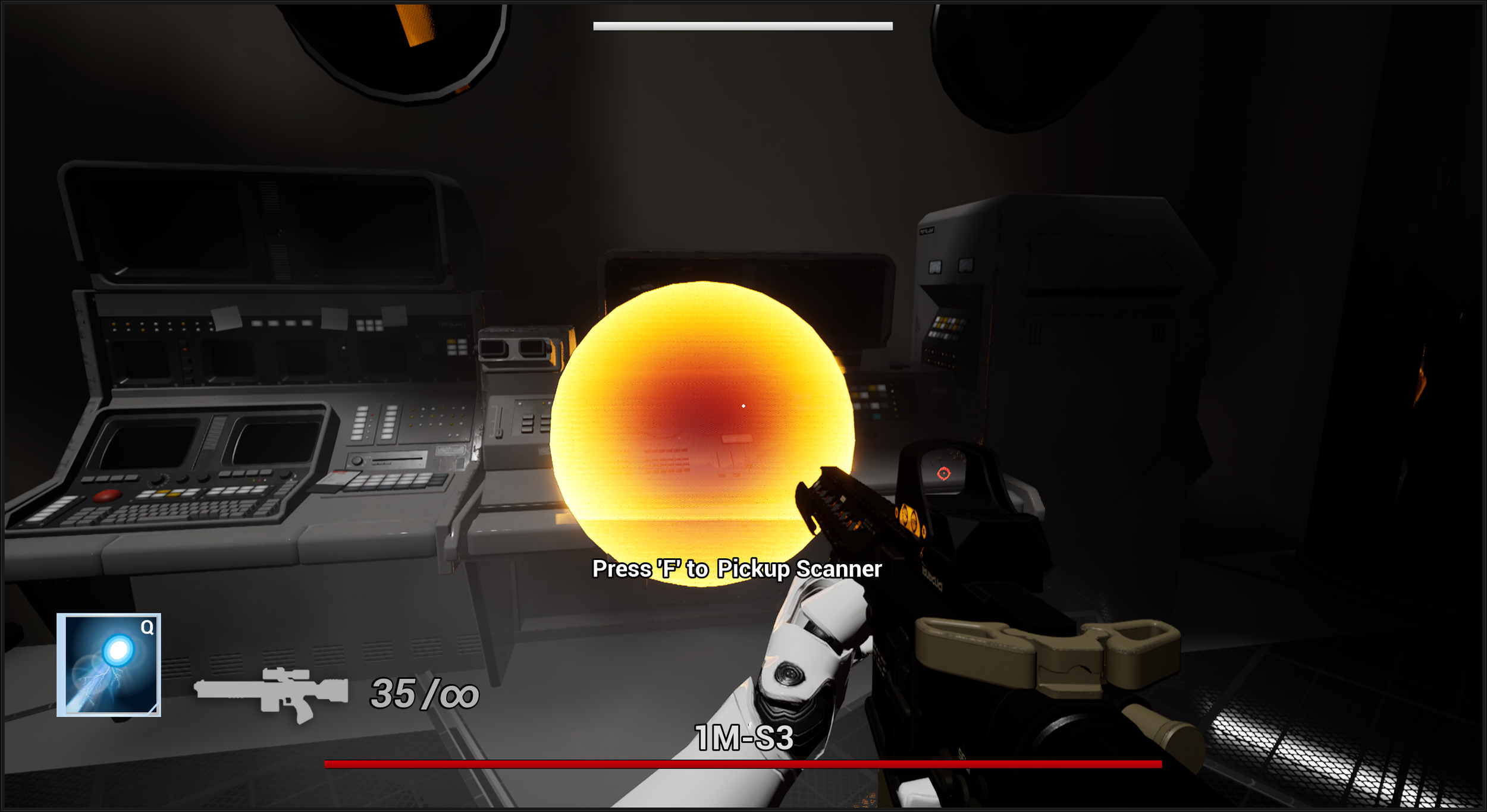
2. Pick Up Scanner Buff
3. Read Master Code
4. Calibrate Panels
5. Bounce ARC Orb at Panels to submit code
6. Input Code
7. Correct code: Enter boss arena
Incorrect code: Return to step 4.
8. Fight boss!
9. Arena Purge: Return to control room, go to step 2. Repeat until boss is defeated.
Encounter Mechanics
Core Encounter Pillars
Players must solve a sequence-based puzzle in a
control room to access the arena and face the boss 1M-S3. The encounter is designed for three players but remains soloable for skilled individuals.
Gameplay Roles
Gameplay centers around three conceptual roles: Informant, Executor, and Combatant. The Informant deciphers the puzzle solution, the Executor carries it out, and the Combatant manages the constant enemy pressure.
Roles are flexible and can be swapped at any time, supporting solo play and encouraging adaptability. This keeps the pacing fast and allows players to take on multiple responsibilities as needed.
Scanner Buff - Informant Role
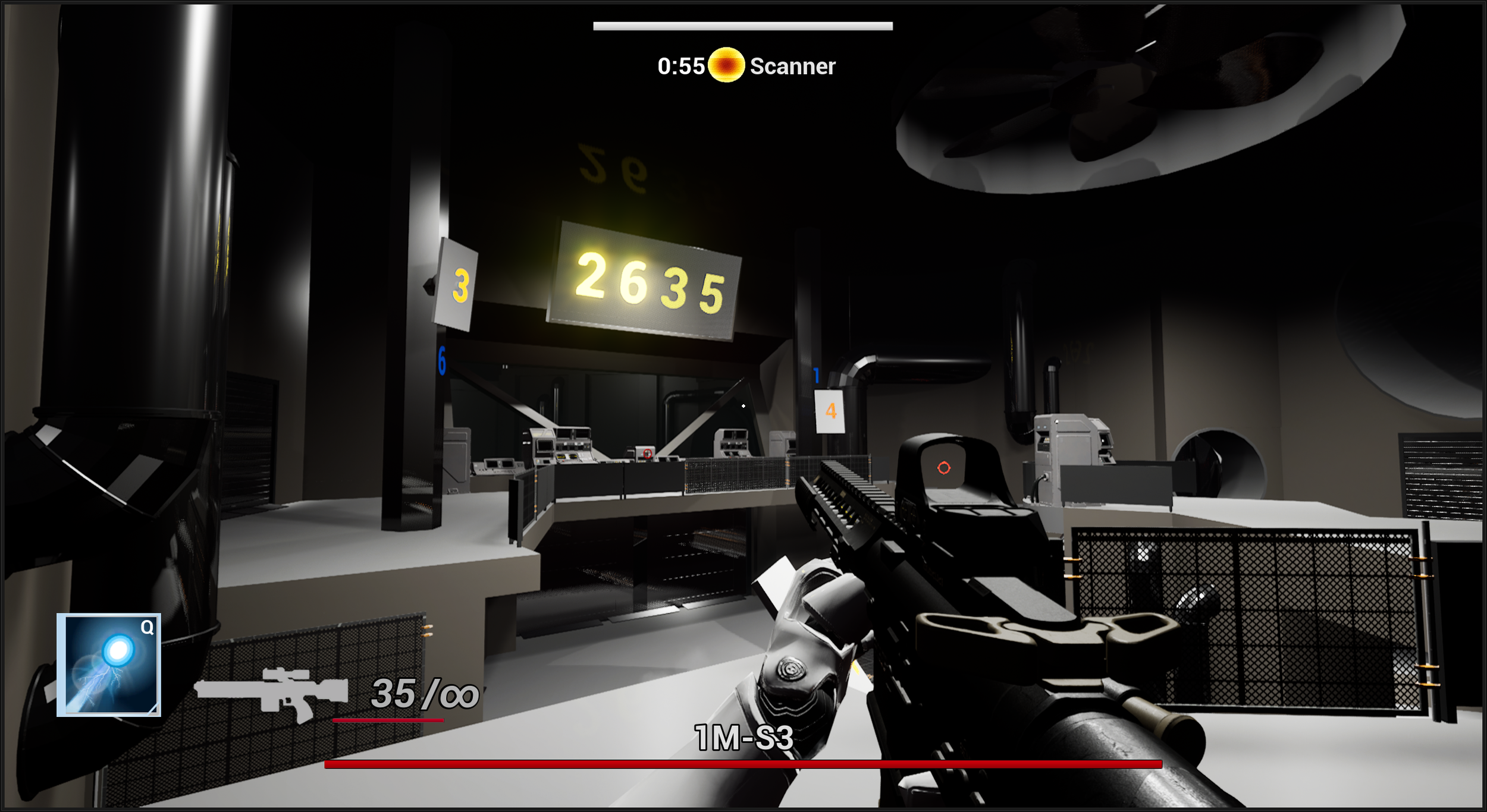
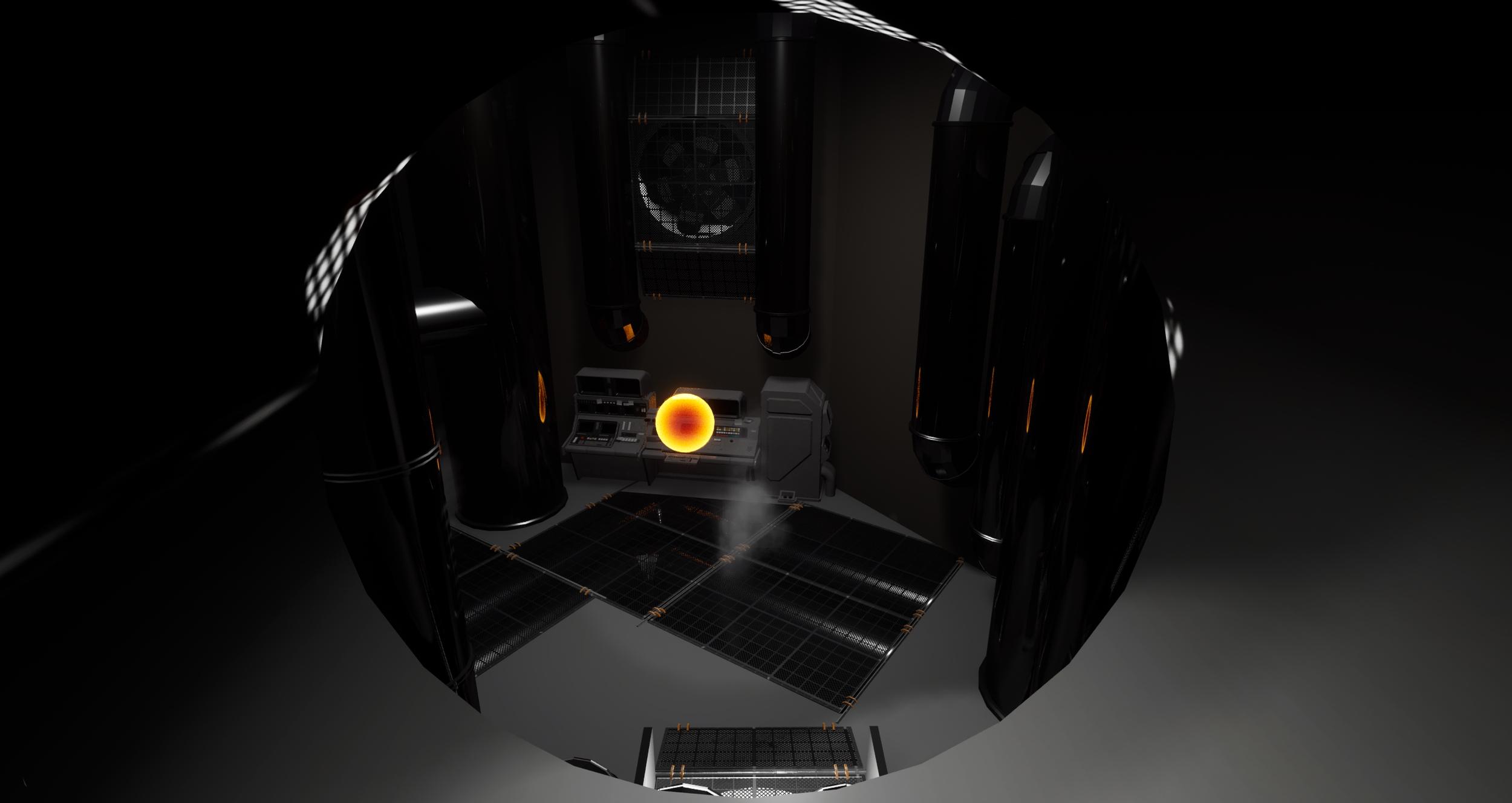
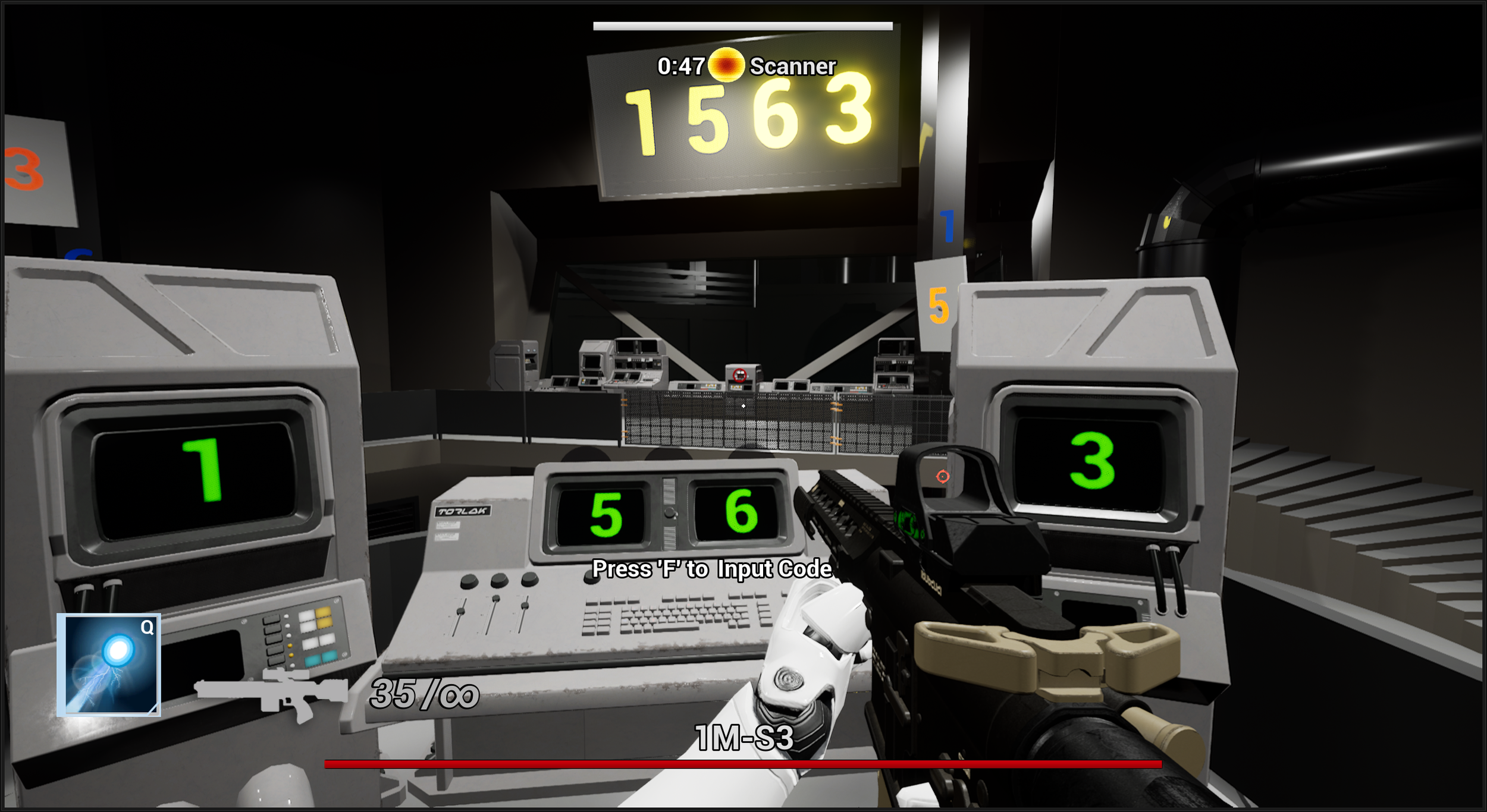
Picking up a Scanner Buff allows the player to view the four-digit master code on a large screen in the puzzle room.
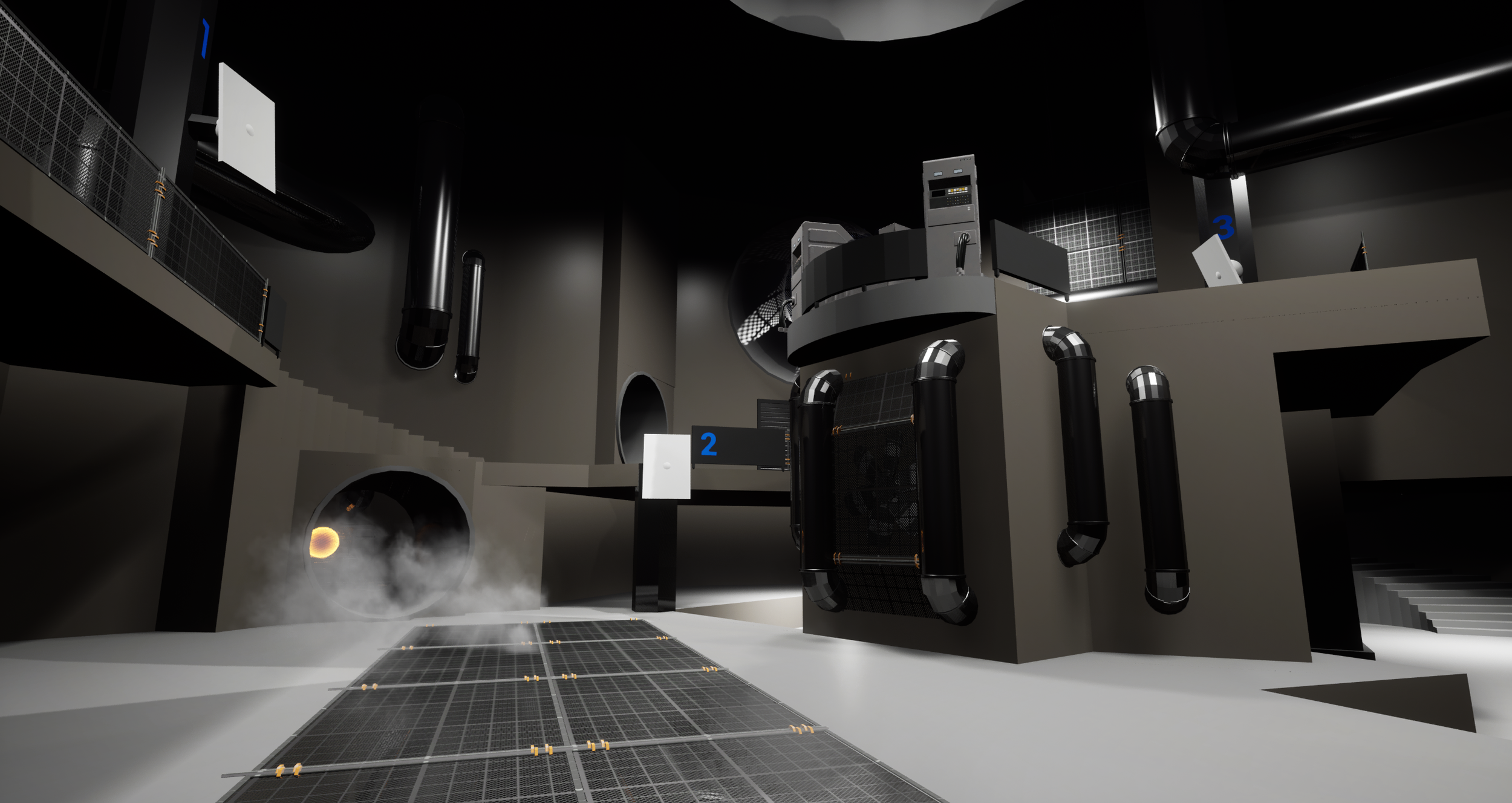
The room contains six numbered panels (1–6).
While active, the buff reveals a target number on each panel, indicating which panel it points to. Shooting a panel rotates its target, updating the displayed number (e.g., Panel 1 showing “2” means it targets Panel 2).
To solve the puzzle, players must align the panels to match
the exact sequence of the master code.
The Scanner Buff lasts 60 seconds, after which a new one
must be obtained to continue.
ARC Orb - Executor Role
Once the panels are aligned, players must throw an ARC Orb
at a panel targeting the first number of the four-digit master code. The orb bounces between panels in sequence,
submitting each displayed number into the main console.
Clear feedback tracks progress: correct inputs appear green, incorrect ones red.
After three failed attempts, an elite enemy spawns,
corrupting all panels until defeated then
resets the system with a new code.
Enemies & Corruptors - Combatant Role
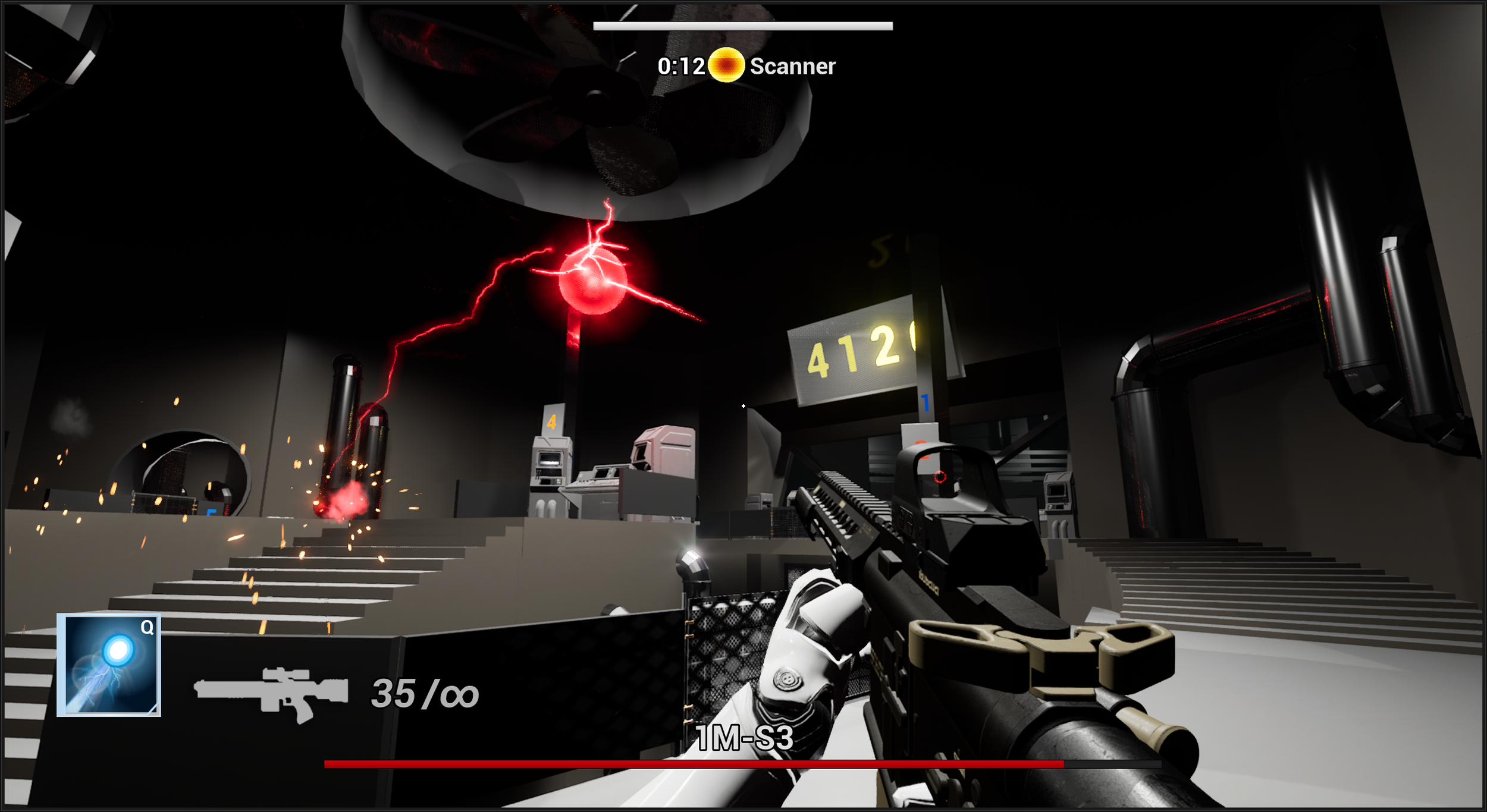
To maintain pacing and tension, ranged enemies spawn in waves during the puzzle, increasing in numbers each phase.
After the first damage phase, Corruptors spawn. These red energy spheres target random panels, corrupting them on contact and making them unusable. If an ARC Orb hits a corrupted panel, the code sequence is invalidated.
Corruptors can be destroyed whenever, restoring
the affected panel.
Fighting the Boss 1M-S3
When players input a correct code, the arena doors open and
a 45-second damage phase begins.
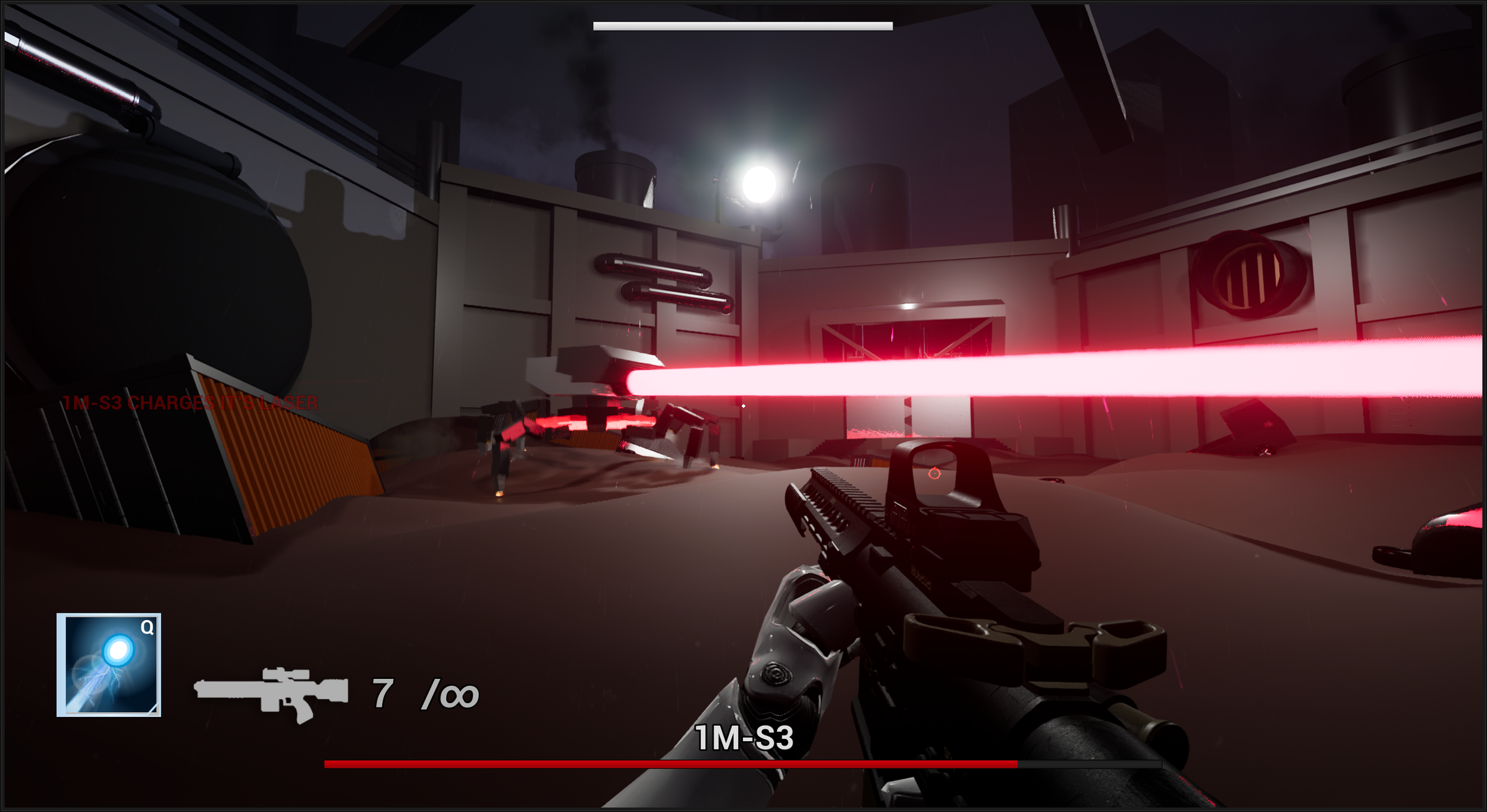
The boss chases players around
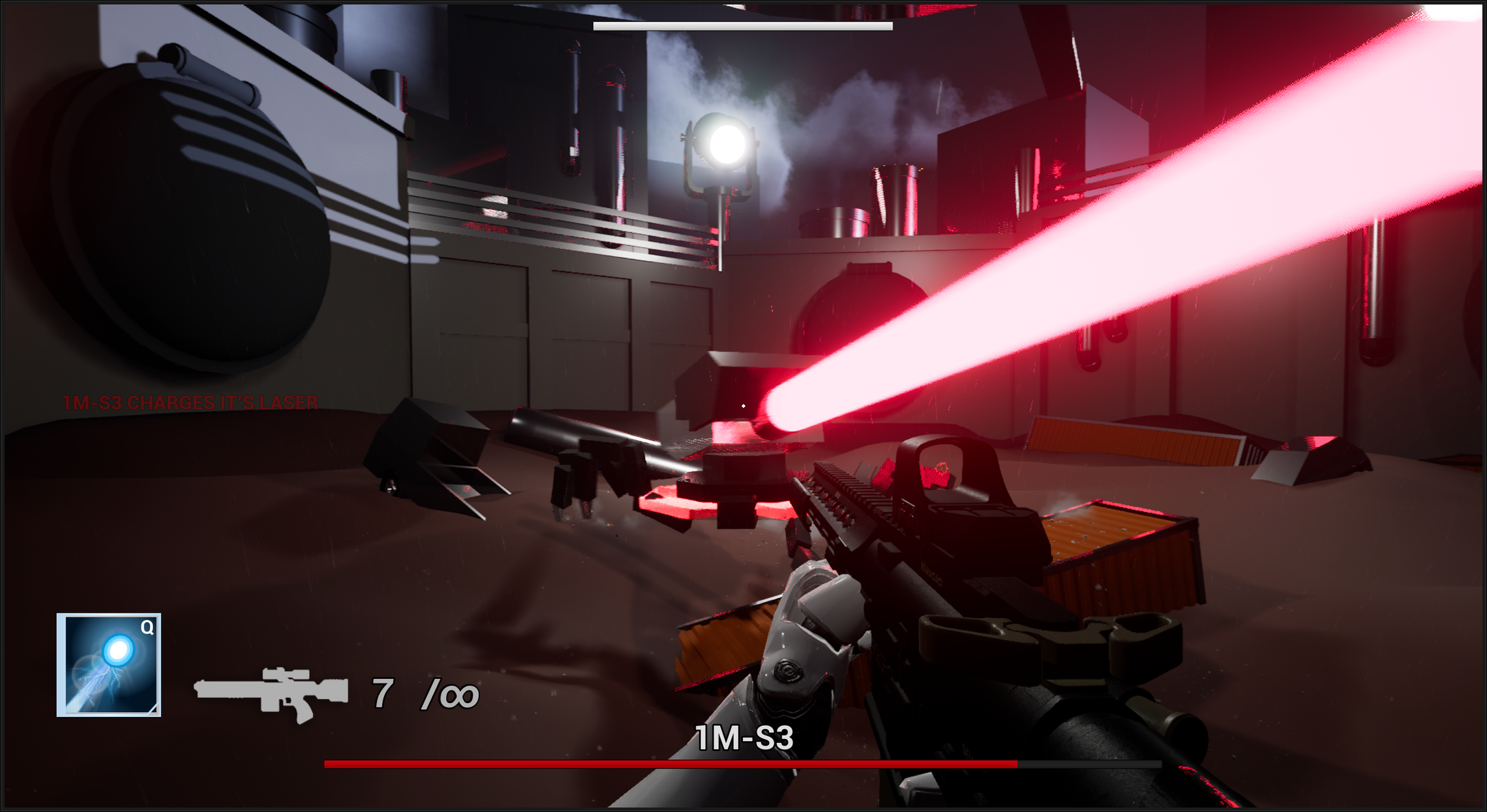
the octagonal arena, using Missiles (eight delayed, random impacts) and a sweeping Laser attack. If it gets close, it performs a proximity AoE attack, forcing
constant movement.
Phase Transition
As the Purge Event begins, players must take
shelter in the control room or be defeated by the flames.
Once inside, blast doors seal shut, providing a brief respite as enemies stop spawning. This moment marks a climactic shift
in the encounter, giving players time to regroup
and reset the pacing before the next phase begins.
When the purge ends, a new master code is generated, signaling the start of the second phase. Players must then repeat the puzzle-solving and damage cycle until the boss is defeated.
Design Techniques
Leading the player
The puzzle room is designed to support fast, fluid movement. Angled corridors and entrances minimize sharp 90-degree turns, while rounded walls and stairs further improve flow.
Entry stairs from the arena are also angled toward
the Scanner Buff rooms, allowing players to move directly into position without reorienting,
keeping the pacing consistent into the next phase.
The layout was iterated through playtesting to ensure it supports encounter pacing without disrupting the puzzle.
Symmetry
The puzzle room and arena are designed with symmetry to support flow and readability. Mirrored entrances and exits
to the Scanner Buff rooms allow players to
quickly navigate in and out.
Panel placement also follows a clear pattern: front and back panels are elevated, while central panels are positioned lower. This contrast helps players quickly identify targets, even at high pacing.
Sightlines
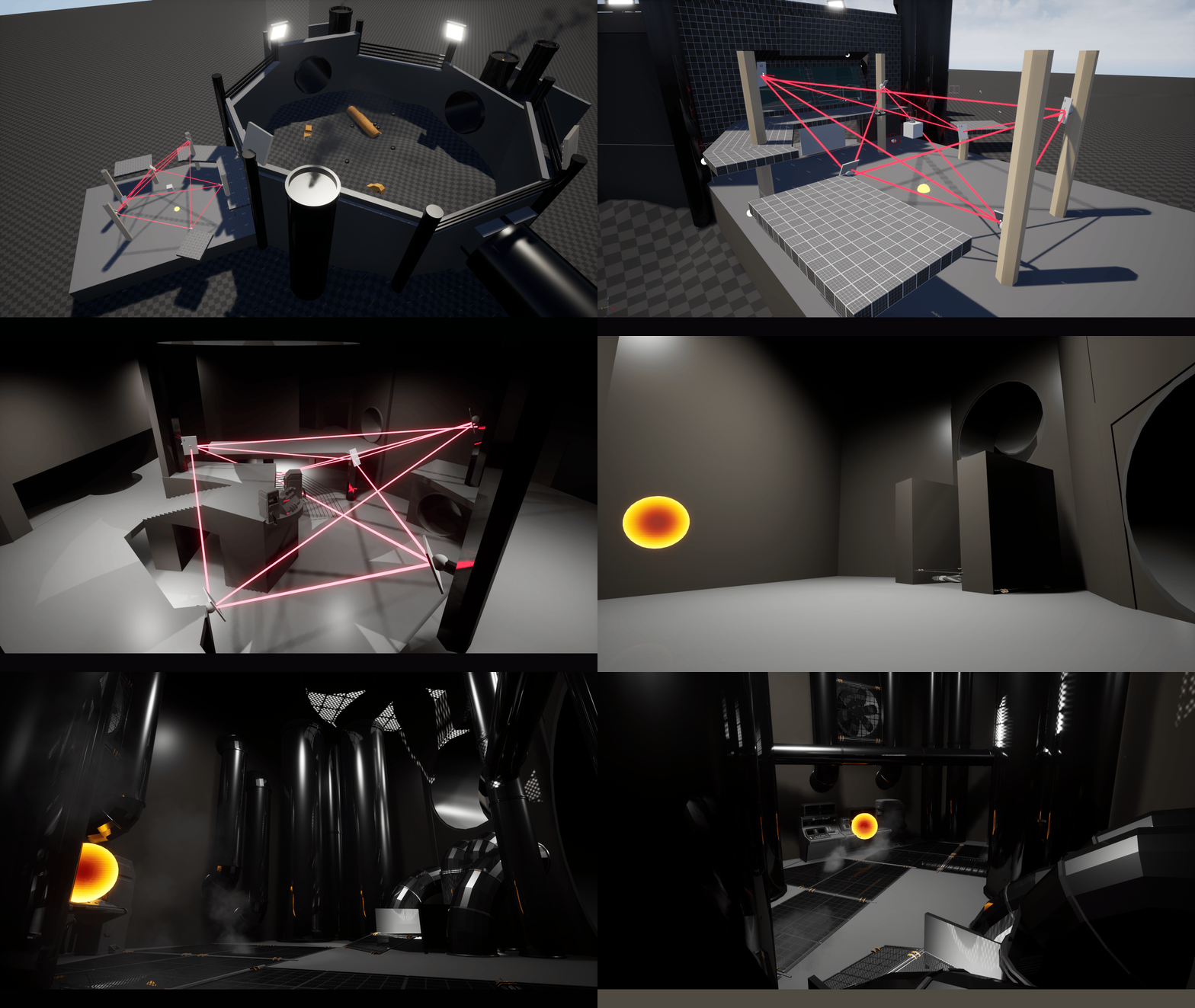
Designing the puzzle room meant having to consider many different sightlines.
I first placed the ARC Orb panels to ensure unobstructed bounce paths, then built the room around those sightlines, adding red beams during development to prevent any accidental blockage.
Player sightlines are just as important: the master code panel
sits above the console for easy reading, and the blast door to the boss arena is in view of the main console, giving instant feedback when a code is entered.
Technical Design
PROTOCOL: 1M-s3
Level & Gameplay Systems
The Boss: 1M-S3
The boss AI was initially built using a State Tree to manage its behavior, but it struggled to reliably enter the tunnel during the encounter. An early workaround using trigger boxes to apply force proved inconsistent, which led to a redesign.
I replaced this with a level sequence triggered during the purge event, allowing the boss to smoothly walk into the tunnel while synchronizing the door animation.
However, conflicts between the State Tree system and sequence-driven animation led to further issues, so I ultimately rebuilt the boss AI as a standard Blueprint to ensure stable and predictable behavior.
Digits must range from 1–X (based on available panels)
No duplicate numbers are allowed
Each number must correspond to
a valid transition defined
by panel connections.
Master Code Generation
I developed a system to generate a valid 4-digit master code under several constraints:
The solution uses a shuffled array of all panels, iterating four times to build the code while tracking selections in a “Used Panels” array to prevent reuse.
Each panel contributes its assigned number to the final code array. At generation, both arrays are cleared, allowing the function to produce a new randomized,
rule-compliant code each time.
Panels
Each panel is assigned a number and can rotate between three target panels from an instance editable array. It supports multiple behaviors depending on interaction type:
When shot, the panel rotates to a target panel from its instance-editable array and updates
its target numberWhen struck by an ARC Orb, it communicates with the Master Code system to submit its current target number, which is then displayed
on the input consoleWhen corrupted, the panel caches its previous state, rotating randomly, and becoming unusable
If a corrupted panel is hit with an ARC Orb, it submits a 0, automatically invalidating the code.
Initially, the submitted number was the panel’s rather than the target number; this was changed after playtesters
found it counterintuitive.
Scanner buff & ARC Orb
Both systems are integrated into the Player Blueprint as
player abilities that interact with panels and the HUD.
The ARC Orb spawns a projectile and triggers a
5-second cooldown to prevent spamming.The Scanner Buff is a world actor that, upon interaction, reveal all panel target numbers and the master code, while starting a timer based
on its own variable.
Both abilities communicate with the HUD, where all interface logic is centralized for clarity.
Enemies & Wave Spawning
The Basic Enemy AI is built using a data table which sets all necessary variables within one blueprint actor.
I implemented a wave-based spawning system
to give players control over encounter pacing
within the puzzle room. A Spawner Manager tracks the
current phase and triggers spawn events on individual spawn points, which handle enemy spawning. The system supports both Basic, Elite and Corruptor Enemies, allowing them to spawn together within the same waves.
Purge Event
When the 45-second dps phase has passed, the Purge Event
is called. A massive jet engine above the arena starts to spin rapidly, casting the arena in a bright orange glow as it
heats up. When the purge event is completed, a new code is generated and the next phase begins.
Encounter Text System
Since the encounter can become hectic and players are often juggling multiple actions simultaneously, I implemented a system that displays text serving a dual purpose:
narrating unfolding events while providing players
with crucial information.
The system pulls text from a data table using enumerator mappings. Each enumerator maps to a specific event, making it easy to see which text
the system will display.
Production
PROTOCOL: 1M-s3
Project Start
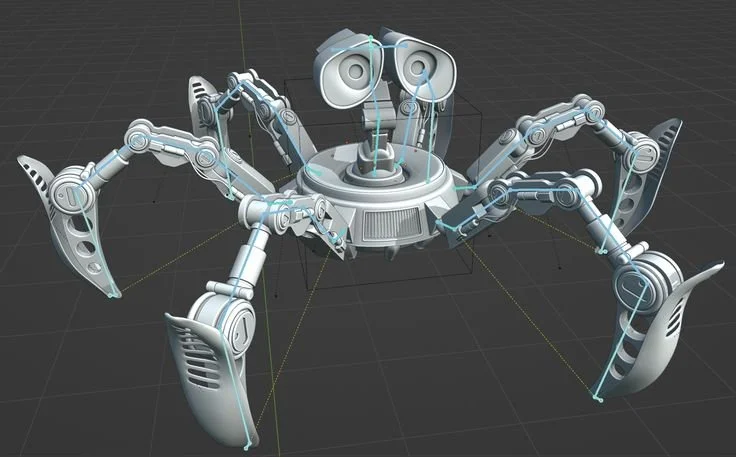
With a clear vision for the boss’s design, attacks,
and movement, I began by creating the mesh, rigging it,
and developing it's procedural animation to make sure
the concept would work.
This went through several iterations, from math based
animation to the final solution of using Unreal Engine’s Locomotor plugin for Control Rigs.
In parallel, I planned the puzzle mechanics,
allowing for efficient implementation once in-engine.
This preparation streamlined development and let me focus
on playtesting and iteration, ensuring the encounter was intuitive and could be solved by new players within a
reasonable timeframe.
Playtesting
I created a playable version of the encounter within the first week to allow early playtesting.
I gathered testers from multiple disciplines (art, level design, programming and procedural) whose feedback helped balance and refine the puzzle to be intuitive without being trivial.
Designed as endgame raid-style content, the encounter averaged 20 minutes for new players, matching my target,
and I continued iterating to improve consistency
and reliability.
Iterative Design process
Based on playtesting feedback, I made several major and minor design adjustments to both the level and the puzzle to improve clarity and pacing. Some of which were:
Repositioning of panel 4 for better visibility
from the main consoleRebalanced enemy waves to prevent
players from being overwhelmedPlayers enjoyed the boss combat, so
I extended the DPS phase and adjusted
the boss’ health accordingly
To improve puzzle readability, I separated panel identifiers from target values and refined color-coding, making player progress more
intuitive and rewarding.
Reference Gathering
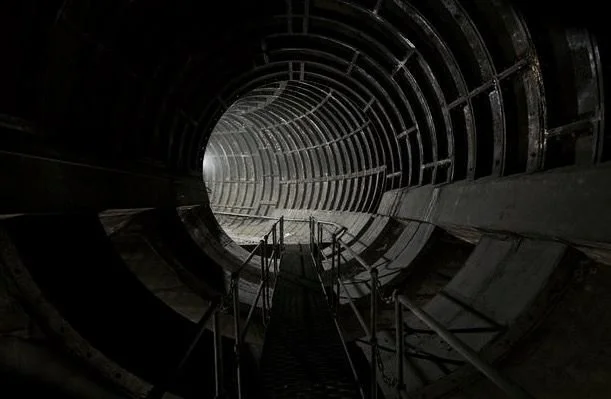
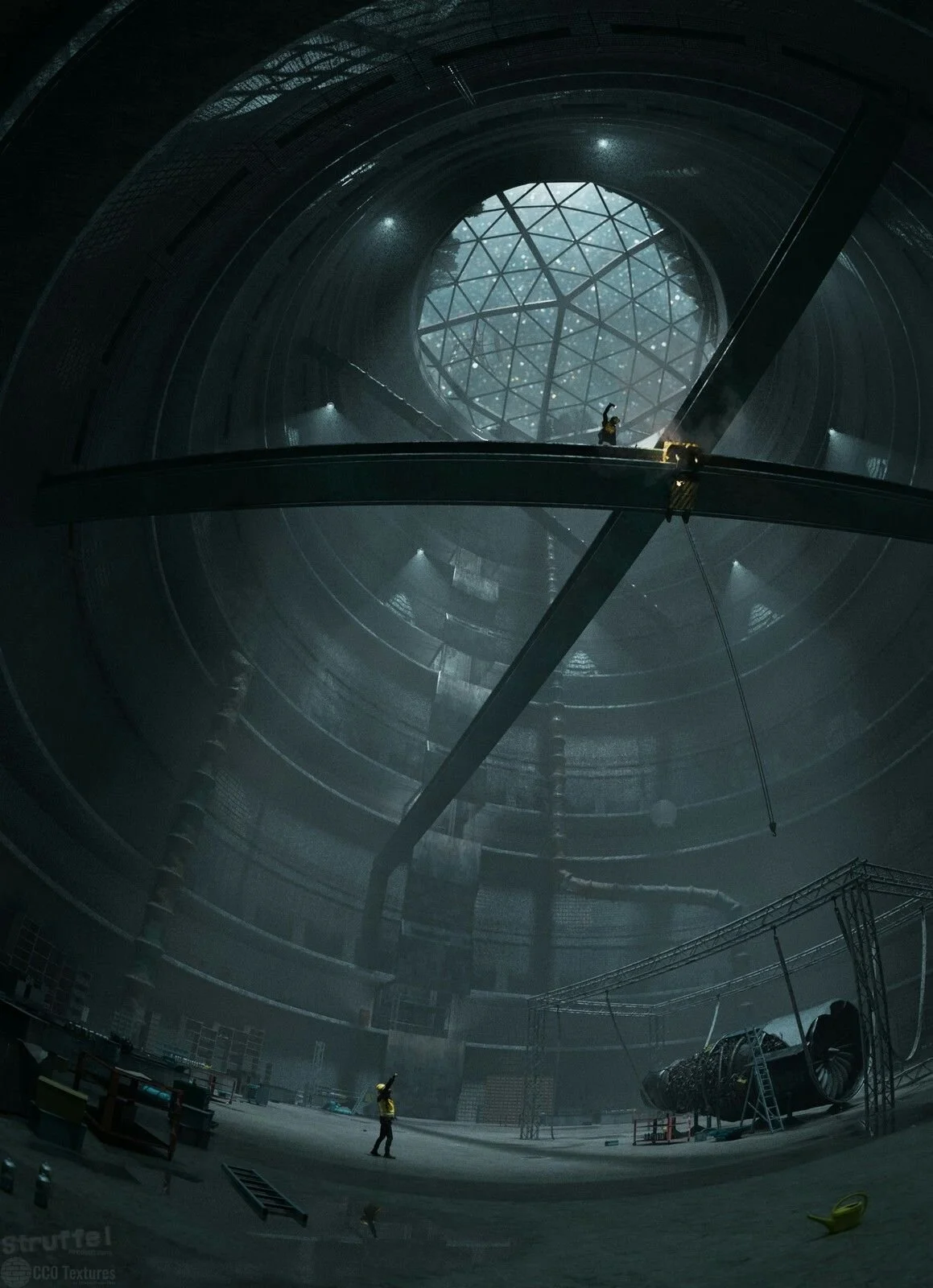
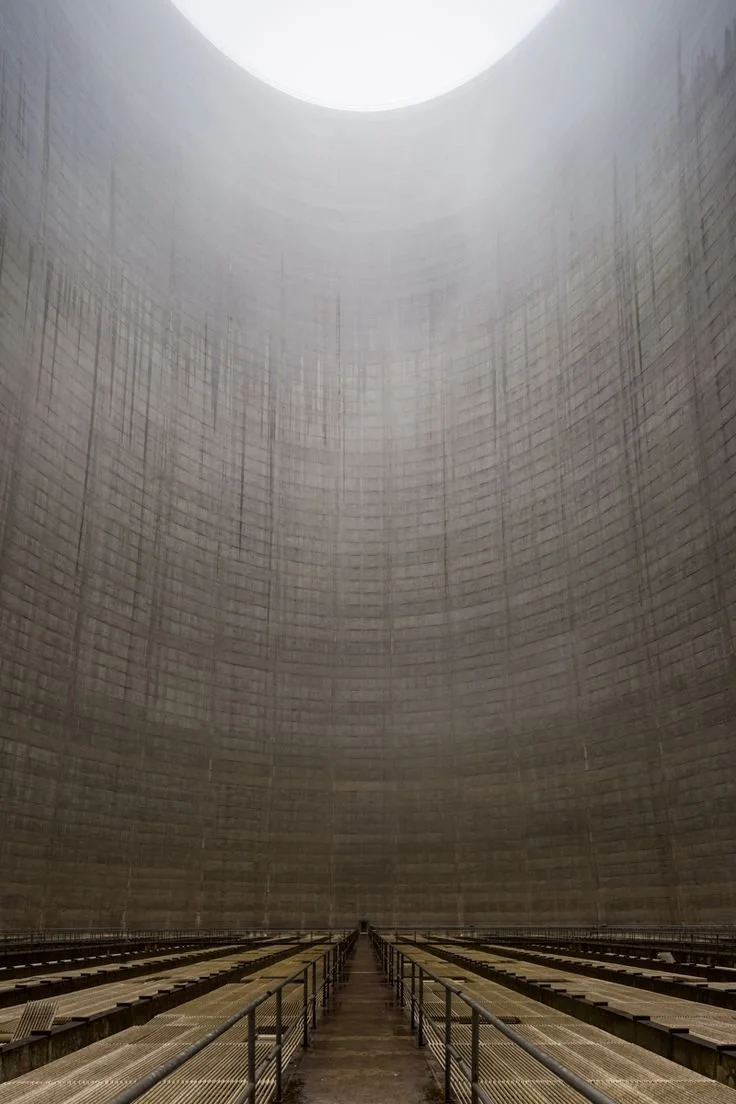
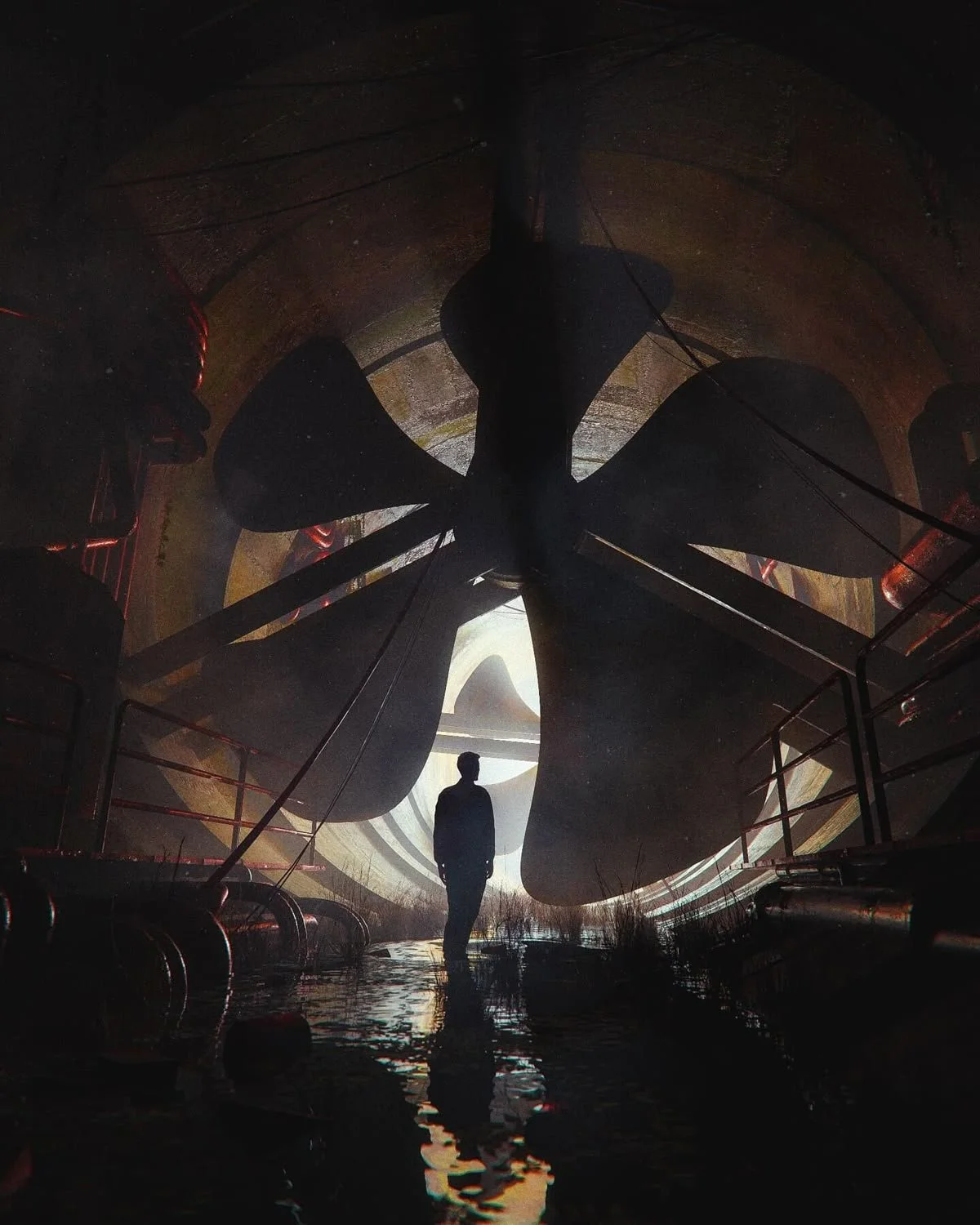
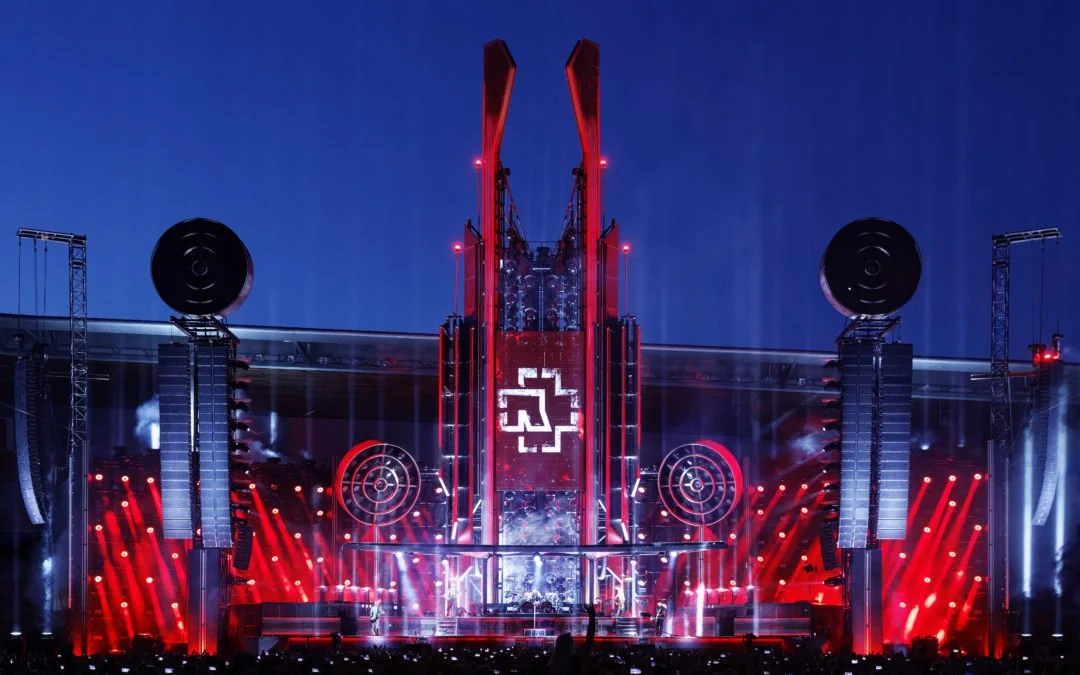
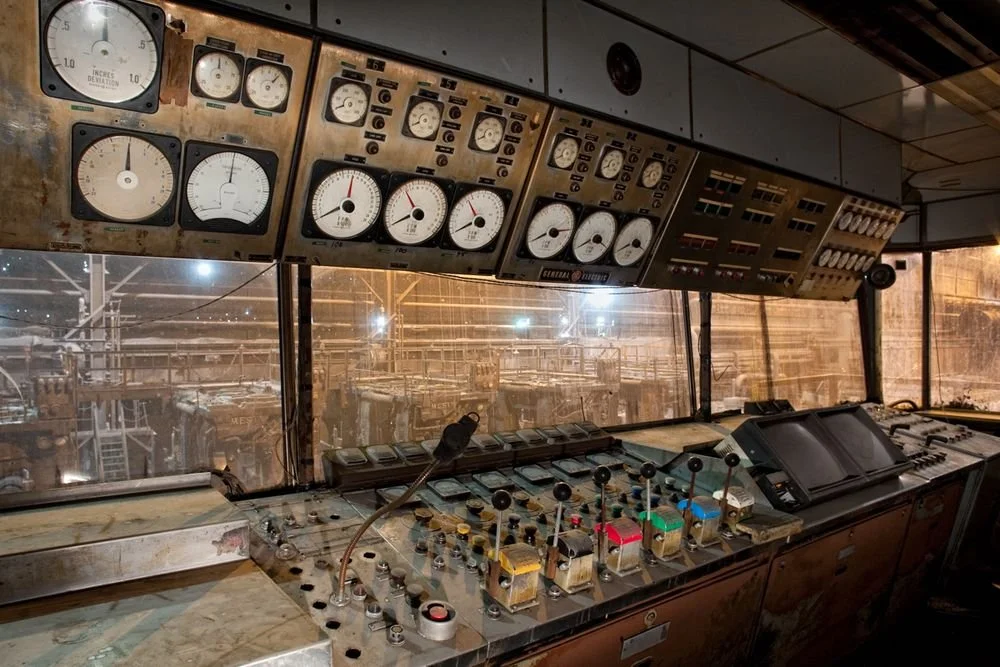
When gathering references, I looked at sci-fi industrial plants and old car scrapyards. I also drew inspiration from
the stage designs of industrial metal bands, which often feature extravagant, sci-fi aesthetics. These influences
helped define the tone and bring my vision to life.
Playthrough w/ commentary
Reflections
Designing a puzzle that’s challenging without becoming frustrating is difficult. I suspected as much going in, which is why I’m especially glad I built a working encounter early in production. Being able to gather playtester feedback so soon proved crucial for shaping all aspects of the design.
Creating puzzles that subvert player expectations while still letting players feel clever for using their own problem-solving skills is one of my favorite parts of level design. This project was a challenge, but seeing playtesters light up, smiling and saying “HA!” when they solved it for the first time, was incredibly rewarding.
If I were to revisit the project, I would reduce the initial confusion around the puzzle being perceived as mathematical. Replacing the numbers with symbols or letters could help communicate that it’s about sequence rather than calculation. This wouldn’t change the puzzle itself, but it would likely make the experience clearer from the start.
Overall, I’m very proud of the final result, and I would love to iterate on it further to potentially build more encounters using the same type of mechanics.
Thank you for reading!